For over a decade, SMBs have relied on a familiar pattern: publish a website, optimize for a few keywords, strengthen their local listings, and trust that Google would deliver the visibility.
It was by no means a perfect system, but it was at least predictable.
That predictability is fading. Even though the fundamentals still matter, search itself has changed form.
- Users now ask questions conversationally.
- AI assistants summarize the web before showing links.
- Interactions that once began on a Google results page increasingly happen inside models that interpret, rewrite, and compress information into a single answer.
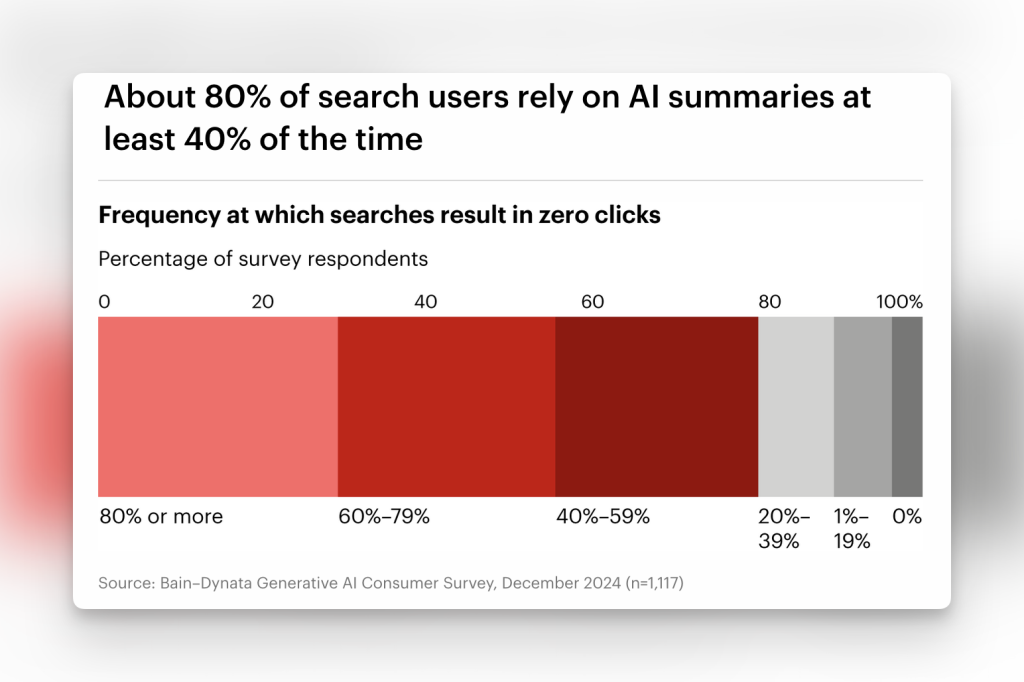
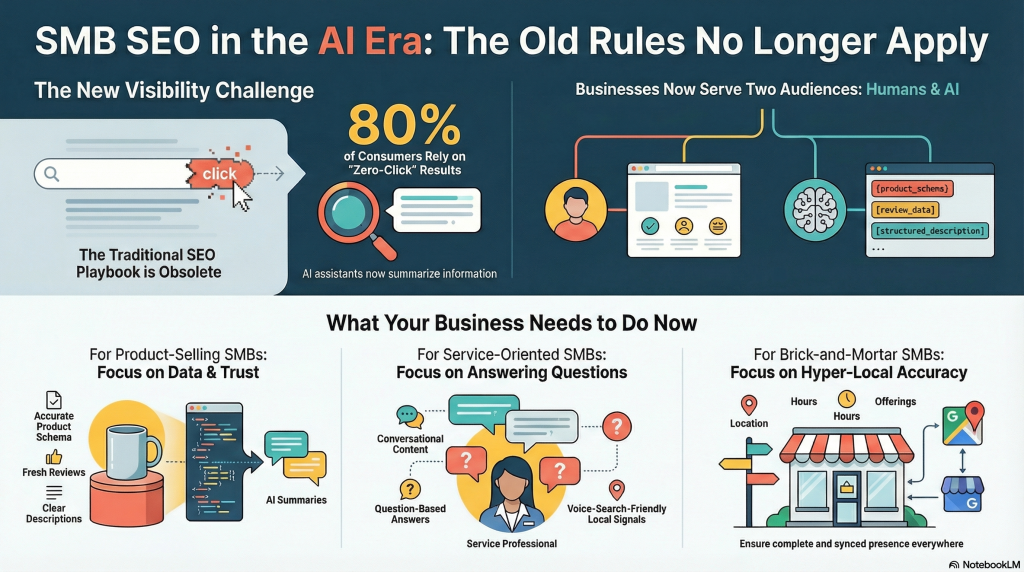
Data reflects this: referral traffic from generative AI sources like ChatGPT grew 123% in six months, and 80% of consumers rely on these “zero-click” results at least 40% of the time, disrupting the traditional, click-driven model SMBs depended on.
SEO brings traffic to your site and the now-called ‘GEO’ puts your brand directly into AI answers, which may bring fewer clicks but more ready-to-convert visitors.
For an SMB, this becomes an issue the moment their website stops being part of the conversation.
A new visibility challenge
A small business website today is serving two different audiences at once:
- Humans searching, comparing, deciding.
- AI systems interpreting structure, meaning, freshness, authority, clarity.
Most SMBs aren’t prepared for either, and the SEO tools that weren’t helping them enough before certainly weren’t built for this new environment. They’re not meeting today’s visibility needs either.
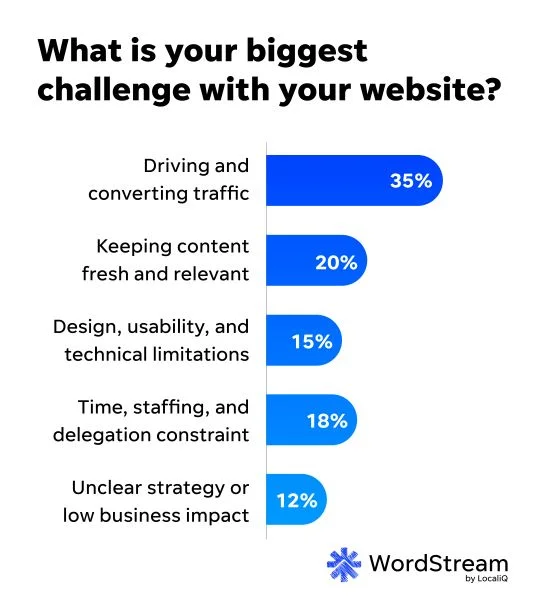
And when you look at what SMBs say themselves: their biggest struggle is simply driving traffic, keeping content fresh, and finding the time to do any of it.
SMBs are not one audience
We work with hosting companies, registrars, and online-presence providers that support millions of SMBs.
What’s clear across geographies is that “small business” is not a monolith. Their visibility challenges are different. At marketgoo, we see five dominant SMB categories:
Product-Selling SMBs
E-commerce, digital products, subscription shops.
What they need now:
- Rich, accurate product schema
- Fresh reviews
- Clear descriptions AI can summarize without losing context
- Trustworthiness signals that help models cite them
Service-Oriented SMBs
Professionals, local services, SaaS, healthcare.
What they need now:
- Conversational, question-based content
- Detailed service explanations
- Voice-search-friendly local signals
- Strong proximity and reputation data
Community & Engagement SMBs
Blogs, nonprofits, educational publishers.
What they need now:
- High-quality, expert content
- Frequent refreshes
- Structured information AI assistants can interpret
- Thematic consistency instead of shallow keyword targeting
Brick-and-Mortar SMBs
Restaurants, salons, retail shops.
What they need now:
- Hyper-complete, accurate local business profiles
- Location, hours, offerings and attributes synced everywhere
- Local schema that AI models trust
- Content that connects digital discovery to physical visits
Hybrid & Emerging Models
Mix of physical + online, gig-economy, marketplace-dependent.
What they need now:
- Consistent business info across channels
- Integrated signals for AI and search engines
- Flexible content patterns that adapt to multiple discovery paths
The rise of generative search amplifies these differences but SEO tools often treat them the same.
And within all of these categories, there is a large subset of micro-SMBs (single-owner or very small teams) who share a requirement: they need something that simply works, with minimal intervention.
Most SMBs won’t get there with checklists
Even the “simple” SEO tools require setup, configurations, and time. SMBs are handed a to-do list and expected to become part-time SEO practitioners.
But most:
- don’t want to learn SEO
- won’t complete tasks by themselves
- don’t have the context to prioritize
- increasingly face AI-driven evaluations of their content that they can’t see, measure, or respond to
What SMBs actually need in this moment
From everything we’ve learned building tools for millions of websites, 3 needs stand out:
1. Clarity
SMBs don’t want complexity. They want to know what matters today, why it matters, and whether anything should be done about it.
2. Confidence
Search visibility is changing too fast for occasional manual audits. SMBs need a system that notices when visibility weakens, when content becomes outdated, or when AI assistants might misunderstand key information.
3. Help
Practical actions that improve how a site appears across both traditional results and generative answers.
This is what we’ve been thinking about for quite a while now.
Why we’re building something different
We’ve spent the last two years rethinking what “SEO help” should look like for a small business. And the answer is not another plugin or chatbot that makes suggestions.
They need something closer to an Agent that acts.
Something that:
- understands their business goal
- improves key elements automatically
- monitors visibility
- explains changes without overwhelming them
- provides guidance if needed
- lives where they already work (inside WordPress)
The shape of SMB SEO has changed, so the tools must change with it.